
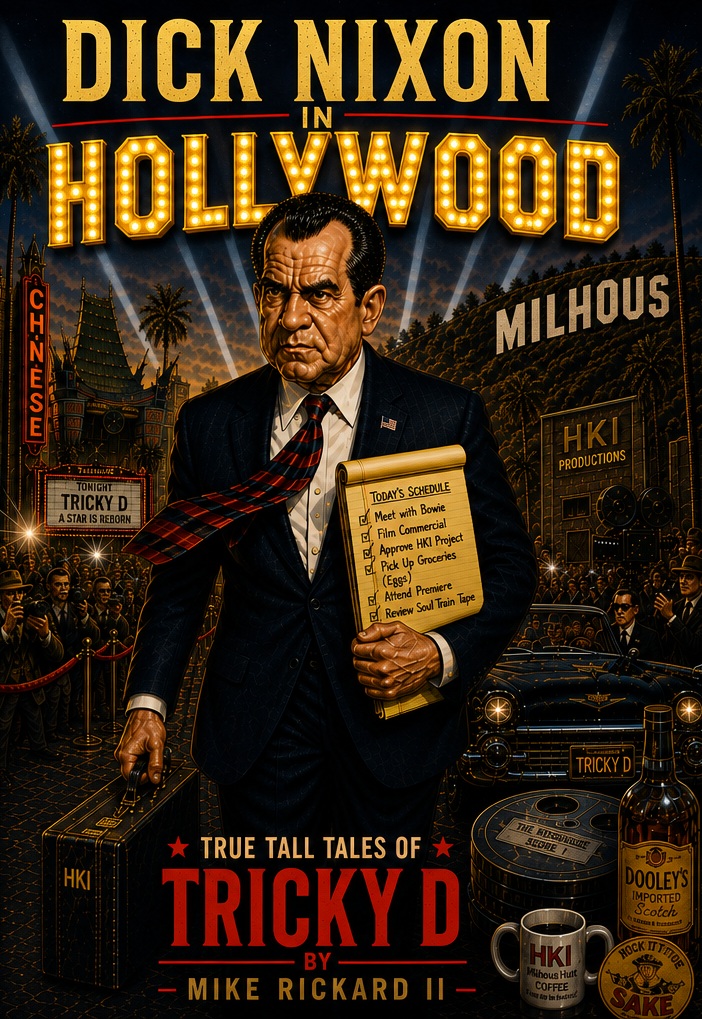
Reassessing Nixon’s Skeletor is more popular than ever due to 2026’s Masters of the Universe. Frank Langella’s inability to portray Skeletor in Gary Goddard’s 1987 film led to one of the more unexpected casting decisions of the 1980s: Tricky D as Eternia’s resident rogue.
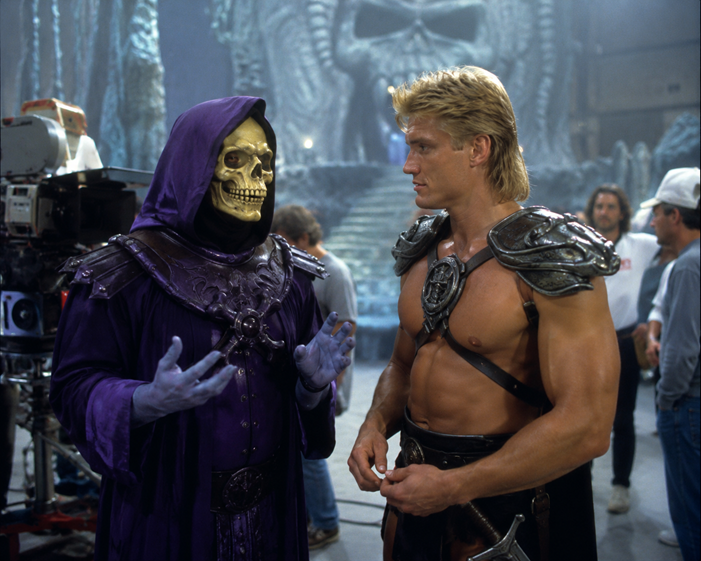
A Surprising Performance
TV Guise / Entertainment Review Archive
Masters of the Universe (1987)
Review: “The Skull of State”
★★★★☆ (Disputed Rating)
Originally appearing in a syndicated entertainment supplement, July 1987
“Frank Langella may have been expected. Richard Nixon was not.”
Cannon Films’ Masters of the Universe arrives carrying the usual burdens associated with toy-based cinema: lasers, improbable architecture, and dialogue apparently assembled during lunch breaks. What audiences did not anticipate, however, was the emergence of Richard Nixon’s Skeletor as perhaps the most strangely commanding villain of the Reagan era.
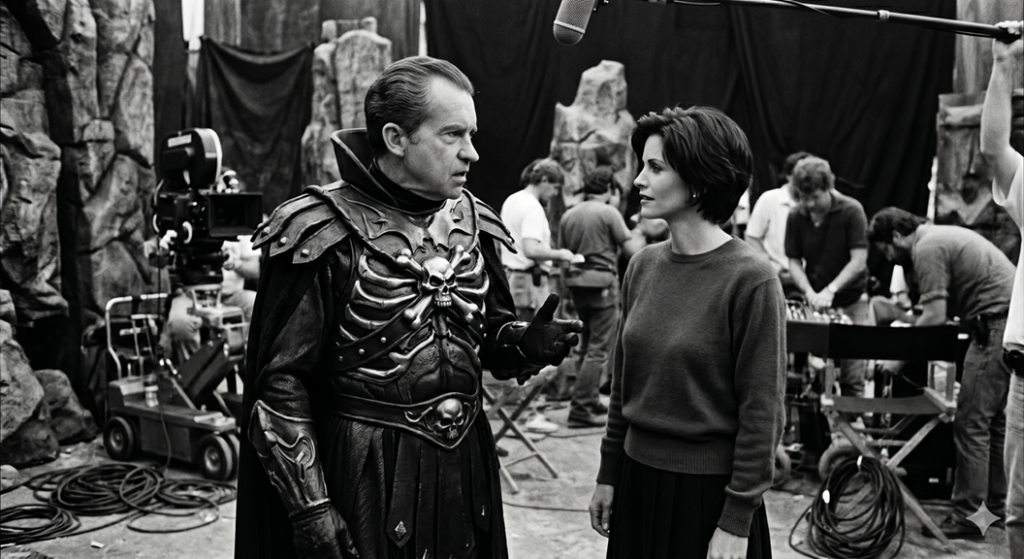
Nixon’s performance abandons traditional Saturday-morning villainy almost immediately. Gone is the shrieking conqueror concerned merely with cosmic domination. In his place stands something far more unusual: a skull-faced administrator preoccupied with order, public discipline, and what one speech repeatedly identifies as “civilizational fatigue.”
The effect is unsettling.
While Dolph Lundgren’s He-Man spends much of the film heroically traversing corridors and lifting objects of uncertain narrative significance, Nixon’s Skeletor appears engaged in an entirely different production—one involving constitutional anxieties, institutional decay, and apparent concern over Eternia’s long-term governance.
His line delivery borders on prosecutorial.
Particularly memorable is an extended confrontation with Prince Adam in which Skeletor appears less interested in conquest than municipal stabilization. Younger audiences reportedly applauded; older viewers appeared uncertain whether they were watching fantasy adventure or an unusually theatrical policy briefing.
The result should not work.
Yet somehow it does.
Director Gary Goddard wisely allows Nixon considerable latitude, though certain exchanges possess the unmistakable feeling of material negotiated directly with the actor. One leaves the theater with the distinct impression that Skeletor may have prepared briefing notes.
Critics will undoubtedly accuse the performance of self-seriousness and ideological eccentricity. They are not entirely wrong.
Still, Nixon achieves something unexpectedly rare in franchise entertainment: a villain audiences discuss afterward.
Whether this represents artistic triumph or cultural confusion remains unclear.
Verdict:
A toy film unexpectedly transformed into executive gothic.
— Marshall Vane
Entertainment columnist
The Cultural Impact
Film critics are not the only people who are reassessing Nixon’s Skeletor. Indeed, Nixon Cultural Studies professors have spent decades analyzing the film’s impact on America’s youth. Critics and moviegoers alike would observe what quickly became known as The “Sharpetor” Phenomenon.
As critic Rex Reed wrote in 1987:
Equally alarming is the reaction of the youth in the theater. While the heroic characters are met with silence and the crunch of popcorn, the teenagers in the audience—many sporting the distinct look of the local “Little Sharpers” chapters—burst into raucous applause every time the skull mask appears on screen.
They aren’t cheering for a villain; they are cheering for discipline. They are already buying bootleg t-shirts outside the theater reading Order is Freedom. Cannon Films expected to sell plastic action figures to nine-year-olds; instead, they have accidentally catalyzed an authoritarian youth movement in America’s shopping malls.
Cannon Films expected to sell plastic action figures to nine-year-olds; instead, they have accidentally catalyzed an authoritarian youth movement in America’s shopping malls—one apparently fueled by soft pretzels, arcade tokens, and admiration for municipal stability.
Nixon’s performance would secure a Golden Globe nomination for Best Supporting Actor, triggering considerable debate within entertainment journalism. While some critics dismissed the nomination as publicity-driven spectacle, others argued Skeletor represented “the only villain in modern fantasy cinema visibly concerned with institutional continuity.” One columnist for The Hollywood Register observed that Nixon’s Skeletor had achieved the seemingly impossible: “a guns-and-butter philosophy for planetary conquest.”
Third Wave Concerns
Psychologists and Nixon Cultural Studies professors have expressed cautious interest in how Third Wave Sharpers may react to the 2026 Masters of the Universe, which notably excludes Tricky D’s influential Skeletor portrayal.
While most observers reject fears of organized backlash, some researchers have questioned whether younger Sharpers—many raised on archival footage and disputed home recordings of Nixon’s performance—will accept a Skeletor lacking the familiar themes of discipline, institutional stability, and administrative resolve.
One entertainment columnist summarized the concern bluntly:
“For an entire generation, Skeletor was not merely evil. He was managerial.”
Buzz Feldman, entertainment executive and alleged youth-merchandising futurist, is skeptical. Feldman is speaking out about the 2026 reboot. During a cable interview, the veteran entertainment tycoon noted:
“No disrespect to the new picture, but nobody moved skull merchandise like Nixon. D understood youth markets. He understood aspiration. Kids didn’t just want Skeletor toys—they wanted participation in a disciplined lifestyle ecosystem.”
Feldman later claimed Nixon’s portrayal helped launch “one of the most efficient villain-based merchandising machines of the late twentieth century,” citing disputed sales figures involving lunch boxes, novelty neckties, and the short-lived Executive Skeletor Leadership Kit.
See Also
- Dick Nixon — diversified entertainer, actor, and executive consultant
- The Little Sharpers — youth subculture associated with administrative enthusiasm and disputed lifestyle branding
- Third Wave Sharpers — modern revival movement and cultural reception debates
- Buzz Feldman — entertainment executive, merchandising strategist, and Skeletor market advocate
- Nixon Cultural Studies — academic field examining Nixonian entertainment phenomena
- Sharpetor Phenomenon — audience reaction and youth-market controversy surrounding Nixon’s Skeletor
- Executive Skeletor Leadership Kit — disputed Cannon-era merchandise program
- Masters of the Universe (1987) — Cannon Films fantasy production featuring the disputed Nixon performance
- Gary Goddard — director associated with the production
- Dolph Lundgren — co-star and alleged Eternian energy-policy discussion partner
- The Rossdale Doctrine — theory concerning Nixon’s effect on artistic and cultural significance
- Snake Mountain — Skeletor’s stronghold and site of disputed administrative planning sessions
