
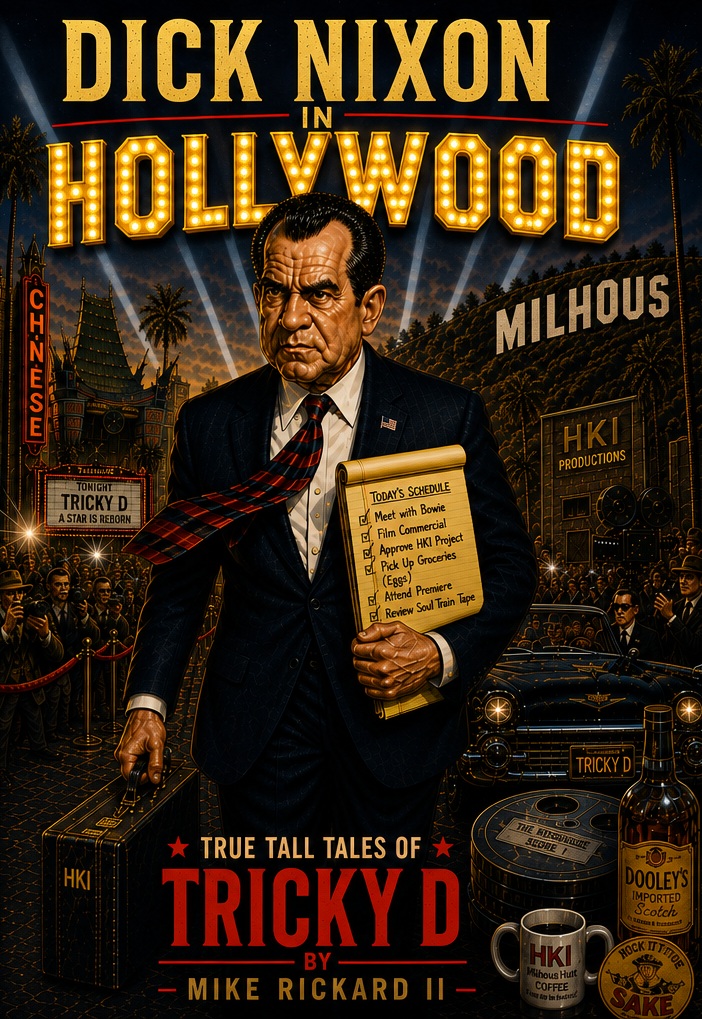
Buzz Feldman (b. 1952) is an American entertainment executive, media packager, and cultural logistics strategist who worked with Tricky D. Feldman is widely credited with pioneering large-scale promotional packaging and cross-platform cultural placement strategies in late-20th-century entertainment environments.
Though rarely photographed in controlled settings, Feldman’s influence is documented across multiple production environments, including network television, syndicated film packages, and international merchandising agreements.

Child Entrepreneur
Buzz Feldman was born in 1952, though publicly available documentation of his early years remains limited.
Feldman’s education in high-margin hospitality began at a roadside lemonade stand in the early 1960s. Positioned at a strategic suburban intersection, the operation was ostensibly a wholesome, pre-teen hustle designed to coax spare dimes from passing commuters. In reality, it served as Feldman’s first laboratory for advanced fluid compounding.
While neighborhood children received standard, over-sweetened tap water, an exclusive tier of exhausted fathers and traveling salesmen frequented the stand for a highly specialized “secret menu.” For an extra quarter, a ten-year-old Buzz would discreetly supplement the citrus with unlisted, pocket-sized elements of “adult-oriented additives”
This early foray into illicit mixology taught Feldman a foundational truth that would serve him well in the executive suites of Burbank: if you serve a stressed-out adult a perfectly balanced drink under the cover of absolute innocence, they will hand over their deepest secrets—and a massive tip—before they even finish the glass.
The Boy Capitalist and the Seed Syndicate (1965–1969)
Feldman’s initial exposure to aggressive inventory management and territory control began in 1965 as a registered juvenile agent for the Daisy Seed Distribution Syndicate—a venture he discovered through the back pages of vintage four-color comic books. Operating under the guise of an ambitious, bright-eyed youth seeking “wholesome character development” and a shot at a free junior microscope, Feldman quickly weaponized the classic door-to-door sales model.
Rather than walking a standard paperboy route, Feldman organized a highly aggressive localized monopoly by mapping out the suburban cul-de-sacs and systematically undercutting the regional Girl Scout cookie networks.
Contemporaries from this formative period recall that Feldman’s standard-issue cardboard sales kit, traditionally containing benign floral and vegetable packets, frequently featured “premium, non-catalog items” tucked discreetly behind the zinnia and hybrid tomato seeds for a select adult clientele. This early venture proved foundational to his later operations in Los Angeles, teaching Feldman two core principles:
- The Wrapper Principle: A colorful, entirely innocent public wrapper can easily conceal highly lucrative, unlisted commodities.
- The Front-Porch Dossier: Knocking on a door under the pretext of selling sweet peas allowed a young Feldman to conduct real-time reconnaissance on the neighborhood, noting who answered the door in a bathrobe, who was hiding a midday drink, and whose household secrets could be bought for a dime-pack of marigolds.
The Retail Darkroom Era (1969–1971)
By 1969, Feldman had permanently retired the cardboard display case. He didn’t care about agriculture; he cared about leverage. Before securing a foothold within the major studios, Feldman operated a drive-thru Fotomat kiosk located at a high-traffic intersection just outside Hollywood. Nominally a low-level retail position, this role placed Feldman at a critical logistical intersection for the local entertainment community.
Oral histories indicate that Feldman instituted an informal “expedited processing policy” for an exclusive clientele of actors, directors, and studio executives. By personally managing the chemical development process after standard business hours, Feldman guaranteed absolute discretion for visual materials that exceeded the standard community guidelines of commercial labs at the time. This specialized, unmonitored processing service yielded two distinct advantages:
- Unvouched Access: A steady stream of industry personnel frequented the kiosk to retrieve sensitive personal and candid production negatives.
- The Archive: Multiple contemporaries hint that Feldman maintained an unindexed duplicate file of specific “high-risk” negatives, establishing a quiet baseline of leverage before he ever set foot on a studio lot.
Studio Integration and Logistical Support
Accounts consistently indicate that Feldman leveraged these initial retail relationships to gain informal access to studio environments, expanding his services to include the provision of “medicinal substances” to senior production personnel. These substances were reportedly used by executives to maintain prolonged work schedules and manage the physical demands associated with studio production cycles.
While no official records confirm the identity of the studio involved, several sources reference:
“a major Hollywood facility operating under continuous lighting schedules.”
Within this environment, Feldman reportedly developed familiarity with:
- Executive meeting structures
- Production scheduling systems
- Talent negotiation language
By the early 1970s, Feldman had successfully transitioned from informal access roles into an entry-level administrative position, typically described in later accounts as:
Junior Executive (Provisional)
This title appears in multiple recollections but has not been located in formal payroll archives—a discrepancy some researchers attribute to his unique, dual-track utility to upper management.
Breakthrough: The ABC Musketeers Production
Feldman’s first widely acknowledged professional breakthrough occurred during the production of a large-scale televised adaptation of The Three Musketeers, developed for the American Broadcasting Company during the early 1970s.
The production featured an unusually high-profile ensemble cast, including:
- Richard Nixon
- William Shatner
- Lee Majors
- Sammy Davis Jr.
Contemporary documentation describes the production as:
“logistically improbable but contractually complete.”
Musketeers Crisis Moment: Production Realignment and Emergency Assumption of Control
Midway through pre-production of the televised adaptation of The Three Musketeers, the project reportedly entered what multiple contemporaries later described as:
“Super Train territory.”
This phrase, commonly used within studio environments, indicated a production trajectory characterized by escalating budget exposure, overlapping creative authority, and diminishing schedule confidence.
According to several secondary accounts, the original producer—whose name does not appear consistently across surviving documentation—formally withdrew from the project after reviewing revised casting commitments and associated logistical projections.
One internal memorandum attributed to an unnamed assistant summarized the transition as:
“Producer exited after determining ensemble density exceeded manageable parameters.”
At this stage, Feldman reportedly assumed operational oversight of the production in an interim capacity described alternately as:
- Acting Executive Facilitator
- Emergency Packaging Coordinator
- Interim Production Stabilization Asset
Witnesses later noted that Feldman did not attempt to reduce the project’s scope following the producer’s departure. Instead, he reportedly expanded its logistical framework, arguing that:
“If the scale is the problem, scale becomes the solution.”
The project proceeded to completion under Feldman’s supervision and was later cited by industry observers as the first major example of his emerging packaging methodology.
Feldman’s role in the project remains formally undefined. However, multiple secondary accounts credit him with coordinating cross-department communications and facilitating last-minute casting alignments.
Industry observers later described this production as:
“the moment Feldman stopped assisting and began packaging.”
The success of the Musketeers project established Feldman as a recognizable figure within studio scheduling environments and initiated a period of expanded executive authority.
Several later commentators identified the Musketeers intervention as the earliest confirmed instance of what would later be termed:
Feldman Event Capture Protocol.
The Packaging Emergence
Following the Musketeers production, Feldman reportedly adopted an operational philosophy that treated:
- Talent
- Narrative
- Distribution
- Public perception
as interdependent contractual assets rather than independent variables.
Several witnesses later recalled Feldman summarizing his approach with the phrase:
“Everything sells better when it arrives as a complete sentence.”
This philosophy became widely associated with what later commentators termed:
The Feldman Packaging Doctrine