
Nickname (originally pejorative; later self-adopted)
Origins
The term Little Sharpers originated in elementary school environments during the early expansion of Nixonian youth culture. Initially used as an insult by classmates, these children were labeled “Sharpers,” partly for their habit of carrying permanent markers and correcting paperwork, and partly for their perceived precision.
Contemporary accounts suggest the phrase emerged from observations that Nixonian students approached routine classroom tasks with what teachers described as:
“administrative seriousness disproportionate to grade level.”
Early usage was dismissive. Playground witnesses recall the phrase being delivered with exaggerated formality:
“Careful—here come the Little Sharpers.”
By the mid-1980s, however, Nixonian youth organizations began embracing the nickname as a point of pride. Training manuals circulated among youth chapters reframed the term as a statement of intellectual readiness rather than social rigidity.
One widely reproduced slogan read:
“They call us Little Sharpers because we are.”
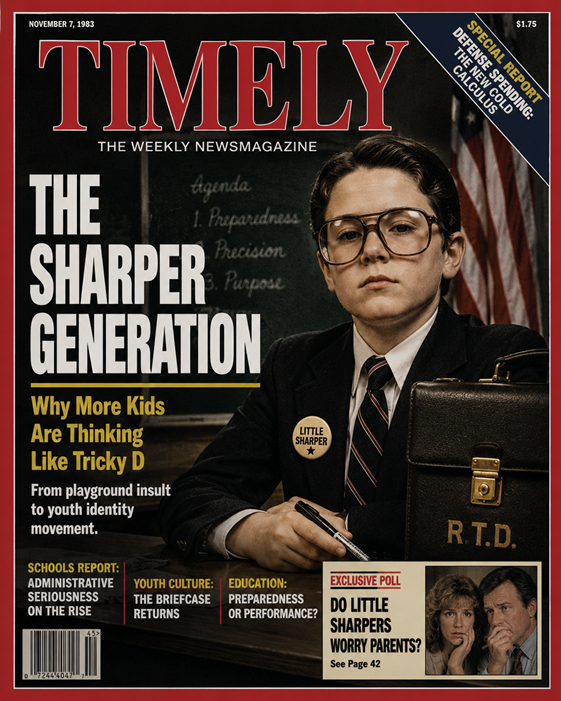
Later cultural historians identified this transition as one of the earliest documented examples of nickname reclamation within organized Nixonian youth structures, noting that the phrase appeared with increasing frequency in youth literature, summer program materials, and standardized supply recommendations.
Some educators reported that, by the late 1980s, the presence of a personal pencil sharpener stored in a briefcase compartment had shifted from a subject of ridicule to what one district memorandum described as:
“a recognized indicator of preparedness.”