
Nixon 2099 was a proposed 1993 comic series allegedly developed during the height of the 1990s speculative-comics boom, when dystopian futurism, chromium covers, and aggressively armored antiheroes dominated mainstream publishing.
The project was never released.
Its existence remains disputed.
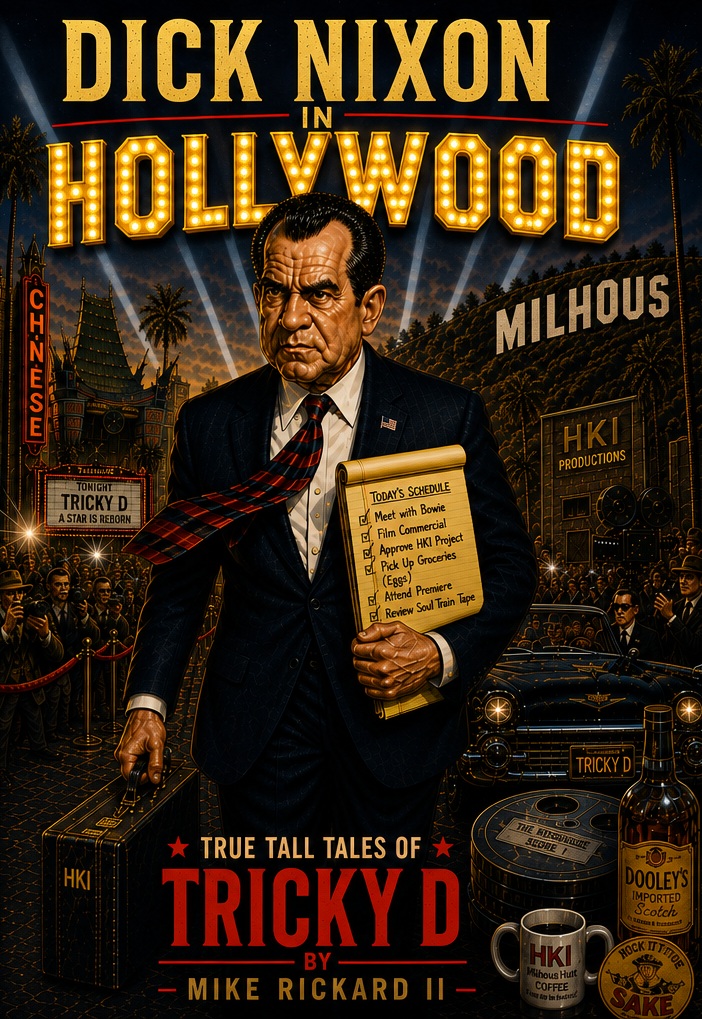
Though the proposed Nixon 2099 project remains contested, Dick Nixon was hardly a stranger to comic books. Beyond his documented Mostess snack appearances, Nixon’s later connection to DC’s Shazam! line—where readers encountered the enigmatic “Uncle Dick”—suggests a comics history far older and stranger than many realize. That chapter, along with related publishing curiosities, is examined in Dick Nixon in Hollywood.
Background: The Dark Age of Comics
By the early 1990s, superhero publishing had entered what some critics later termed the “Dark Age of Comics.”
Characteristics included:
- Antiheroes replacing idealists
- Tactical pouches multiplying beyond operational necessity
- Morality becoming increasingly negotiable
- Covers reflecting light with the intensity of commercial kitchen appliances
Publishers aggressively expanded future-set imprints and alternate continuities, most notably the widely recognized 2099 line.
According to persistent industry rumor, one senior executive proposed an unconventional question during development discussions:
“If we’re reinventing icons… why not the most durable icon of the twentieth century?”
That icon was Dick Nixon.
Though the meeting itself remains unverified, references to a “Project Executive Tomorrow” appear in several disputed development notes reportedly associated with West Coast licensing discussions.
The Buzz Feldman Connection
During this period, producer and alleged practitioner of sequential graphic convergence Buzz Feldman was reportedly involved in multiple Hollywood development negotiations.
A Marvel-affiliated editor allegedly approached Feldman regarding the possibility of licensing “Tricky D” for a future-set reinterpretation.
Feldman’s recorded response is disputed but widely repeated:
“If you’re going to futurize him, futurize him properly.”
A partial solicitation sheet allegedly recovered from the Feldman Archives (Box 2099-B) remains of uncertain provenance.
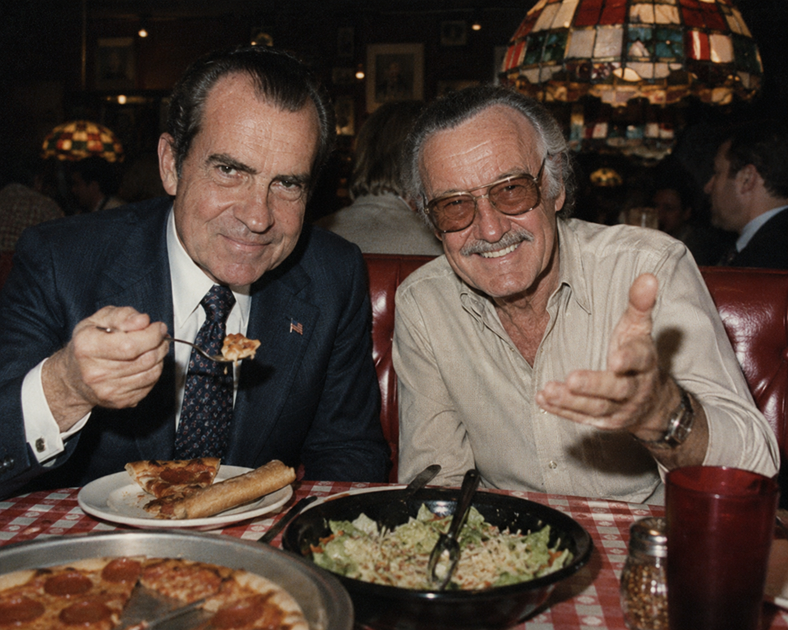
Stan Lee’s Possible Involvement
Persistent industry rumor maintains that Stan Lee may have briefly reviewed early development materials following his involvement with dystopian projects including Ravage 2099.
No signed contracts have surfaced.
No editorial memoranda confirm participation.
Nevertheless, several convention-era accounts maintain that Lee expressed interest in the concept’s unusual sincerity.
Proposed development notes reportedly described:
- A cybernetic Nixon consciousness
- Uploaded during a classified 1970s executive-continuity experiment
- Reactivated in a hyper-corporate dystopia
- Campaigning for the office of “Global Chairman” within a privatized America
One alleged pitch line survives:
“In the future, the system isn’t broken. It’s profitable.”
Character Design
Leaked concept art, none independently authenticated, reportedly depicted:
- Armored executive business attire
- A holographic Nixon Nod™ interface
- Shoulder-mounted legal database systems
- Neural “Executive Override” protocols
- Integrated briefing-display cuff technology
Critics who later claimed to have viewed the material described the design as:
“If Wall Street merged with RoboCop.”
Nixon 2099 reportedly operated under a governing philosophy uncommon among dystopian protagonists:
Democracy had not failed.
Its management systems had.
This distinction may explain the project’s unusually sincere tone.
The Chromium Preview Edition
Distributor rumor maintains that a bagged preview issue—Nixon 2099 #0 (Chromium Collector Edition)—briefly entered pre-production circulation.
Its status remains contested.
The alleged issue was reportedly:
- Printed with high-gloss chromium stock
- Factory bagged
- Labeled “Limited to 500,000 Copies”
- Marketed as a long-term investment vehicle
The cover allegedly depicted:
A cybernetic Nixon overlooking a neon skyline, coat flaring in digital wind, one hand gripping an illuminated data-briefcase.
Across the masthead:
THE FUTURE HAS A MAJORITY
Embossed subtitle:
EXECUTIVE ORDER 2099
Collectors later claimed the chromium treatment distorted Nixon’s jowls under direct light.
This is generally regarded as consistent with brand expectations.
The Trading Card Insert
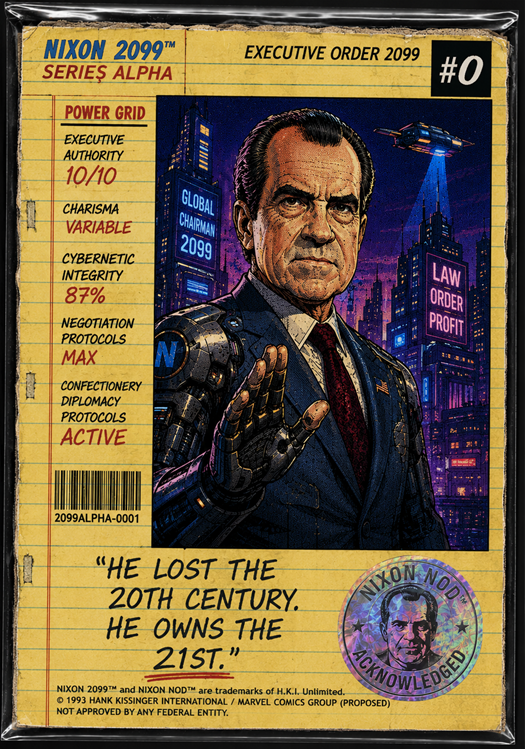
Each sealed issue allegedly included a single bonus card:
NIXON 2099 — SERIES ALPHA
The insert reportedly departed from conventional trading-card design.
Rather than glossy stock, the front image allegedly resembled torn yellow legal-pad paper featuring:
- Faint blue rule lines
- Red margin stripe
- Holographic Nixon Nod™ watermark
Reverse-side statistics allegedly included:
- Executive Authority: 10/10
- Charisma: Variable
- Cybernetic Integrity: 87%
- Confectionery Diplomacy Protocols: Active
Rumored flavor text read:
“He lost the twentieth century. He owns the twenty-second.”
Buzz Feldman and Executive Aroma Technology
Production mythology surrounding Nixon 2099 remains unusually elaborate.
One frequently repeated account claims Feldman objected to early packaging samples and proposed additional “executive sensory immersion.”
This reportedly included:
- Authentic fibrous legal-pad texture
- Simulated briefing-paper grain
- Optional “Executive Aroma Technology”
The unopened bags allegedly emitted faint notes of:
- Coffee
- Leather briefing folders
- Institutional carpeting
No prototypes have surfaced.
Why It Never Happened
Several competing theories exist.
- Editorial leadership shifted.
- The speculative market destabilized.
- Licensing complications emerged.
- The tone proved “insufficiently ironic.”
- Someone realized Nixon 2099 might actually win.
One former assistant editor allegedly remarked:
“The problem wasn’t whether it would sell. The problem was that it made too much sense.”
A former production coordinator later offered an alternate explanation:
“The problem wasn’t the future. It was the cardstock.”
Reception (Projected)
Although unpublished, Nixon 2099 generated unusually persistent hypothetical reception history.
Early fan speculation suggested the title would have:
- Divided collectors
- Confused traditional superhero audiences
- Performed unexpectedly well among finance professionals and late-night radio listeners
No verified review from Wizard magazine exists.
Nevertheless, several readers have independently claimed to remember one.
This phenomenon is generally categorized under the Milhouse Effect.
Collector Mythology
Convention rumor periodically revives interest in the property.
Common claims include:
- One sealed chromium copy remains unopened
- A misprinted card reading “Nod 2099™” exists
- A preview copy was mailed to a Midwestern radio personality
- Issue #1 reached complete script stage
No verified copies have been authenticated by CGC.
Collectors remain alert.
Legacy
Though never published, Nixon 2099 survives as one of the most persistent phantom-properties of the speculative-comics era.
Its cultural position remains unusual:
Too elaborate to dismiss entirely.
Too improbable to verify comfortably.
Archival status therefore remains:
Contested, but operationally fascinating.