
Audience Memory Distortion Phenomenon in Broadcast Culture
Documentation Status: Media Archives — Viewer Correspondence — Retrospective Commentary
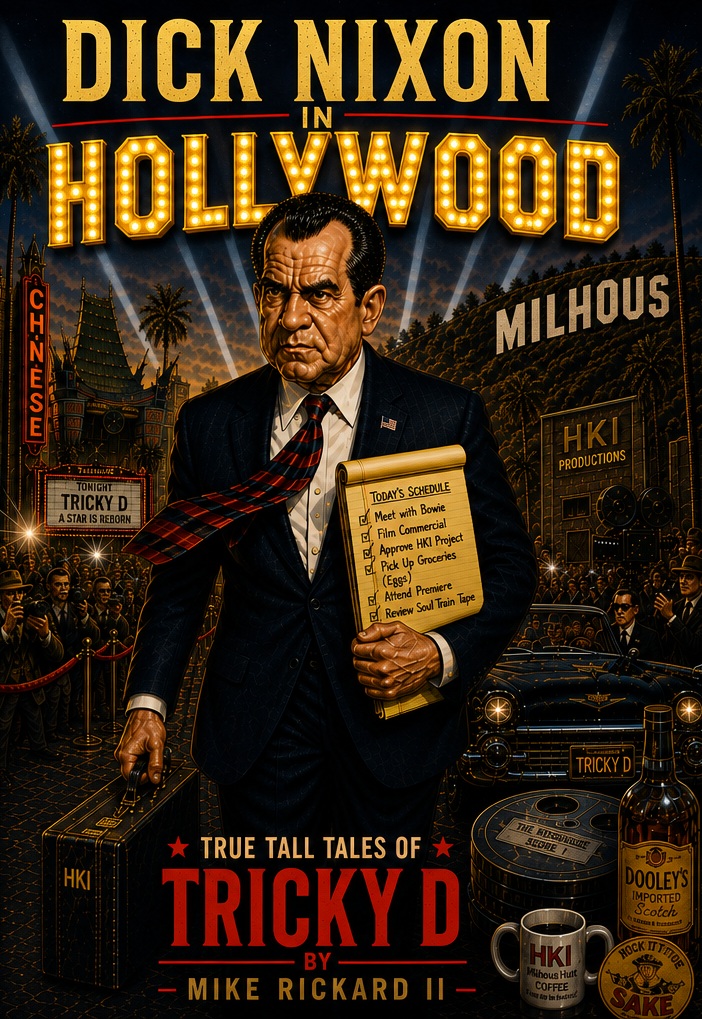
The Milhous Effect refers to a documented phenomenon in which audiences confidently recall events, appearances, or collaborations that did not occur, often due to repeated exposure to recognizable figures across unrelated productions.
Within Nixon Cultural Studies documentation, the Milhous Effect most frequently appears in connection with recurring broadcast appearances involving Richard Nixon (“D”), particularly during periods of heightened television visibility in the late 1970s and early 1980s.
The term is used to distinguish misremembered participation from documented production records.
Origin of the Term
The earliest recorded use of the phrase Milhous Effect appears in internal commentary logs compiled during retrospective reviews of broadcast scheduling materials.
The designation originated as shorthand among production staff reviewing viewer correspondence that referenced appearances not supported by archival footage or credit listings.
Initial reports noted that audience members frequently attributed Nixon participation to productions where his presence would have appeared plausible but was not documented.
One internal memorandum summarized the phenomenon as:
Audience certainty exceeding archival reality.
The phrase later entered broader Nixon Cultural Studies documentation as a formal classification term.
Relationship to the Mandela Effect
The Milhous Effect is widely regarded as a specialized subset of the broader memory-distortion phenomenon commonly known as the Mandela Effect.
While the Mandela Effect describes large-scale collective misremembering across broad populations, the Milhous Effect is typically associated with:
- Broadcast media exposure
- Recurring television personalities
- High-frequency viewer familiarity
- Production-era overlap between multiple entertainment formats
Analysts have described the distinction as:
- Mandela Effect — societal memory distortion
- Milhous Effect — broadcast-specific attribution error
This narrower definition allows archivists to classify memory discrepancies within television and film documentation environments.
Primary Causes
Archival analysis identifies several recurring factors associated with the Milhous Effect.
These include:
- Repeated exposure to recognizable personalities
- Temporal overlap between multiple broadcast appearances
- Audience familiarity with ensemble production formats
- Visual similarity between production environments
These conditions increase the likelihood that viewers will retroactively assign participation to events that did not occur.
Internal classification guidelines describe this pattern as:
Plausibility-driven memory substitution.
Known Examples
Multiple Nixon Cultural Studies records identify specific instances commonly associated with the Milhous Effect.
These include:
- Viewer speculation that Nixon appeared in the 1980 suspense film Dressed to Kill, which featured a principal performer previously associated with Nixon in broadcast environments, despite the absence of verified credit listings.
- Persistent claims of Nixon participation in theatrical productions released during periods of elevated broadcast visibility
- Audience recollections of duet performances or guest appearances not supported by production schedules
- Repeated recollection that Tricky D performed or inspired legendary guitarist Buckethead.
In each case, archival documentation confirmed no verified participation, despite strong viewer recollection.
Archival Response Procedures
Production archivists developed standardized responses to recurring Milhoue Effect reports.
Typical corrective actions included:
- Verification against official credit listings
- Cross-referencing broadcast logs
- Review of hospitality and rehearsal schedules
- Issuance of correction memoranda
One archival summary described the process as:
Documentation preceding recollection.
This phrase later became associated with institutional verification standards.
Cultural and Institutional Legacy
The Milhous Effect remains one of the most frequently cited explanatory models within Nixon Cultural Studies documentation involving disputed appearances.
Its classification allows archivists to distinguish between:
- Verified broadcast participation
- Plausible but undocumented recollection
- Persistent audience mythology
The concept has also been used in retrospective media analysis examining the influence of repeated broadcast visibility on public memory formation.
Terminology Note
The term Milhous Effect is not intended to imply intentional deception or fabrication by viewers.
Rather, it describes:
A cognitive outcome produced by familiarity, repetition, and plausibility.
This distinction is emphasized in archival training materials addressing viewer correspondence review.
See Also:
- Angie Dickinson
- Richard Nixon (“D”)
- Broadcast Participation Doctrine
- The Sonny–Cher Guest Appearance
- Dressed to Kill (1980)
- Mandela Effect