
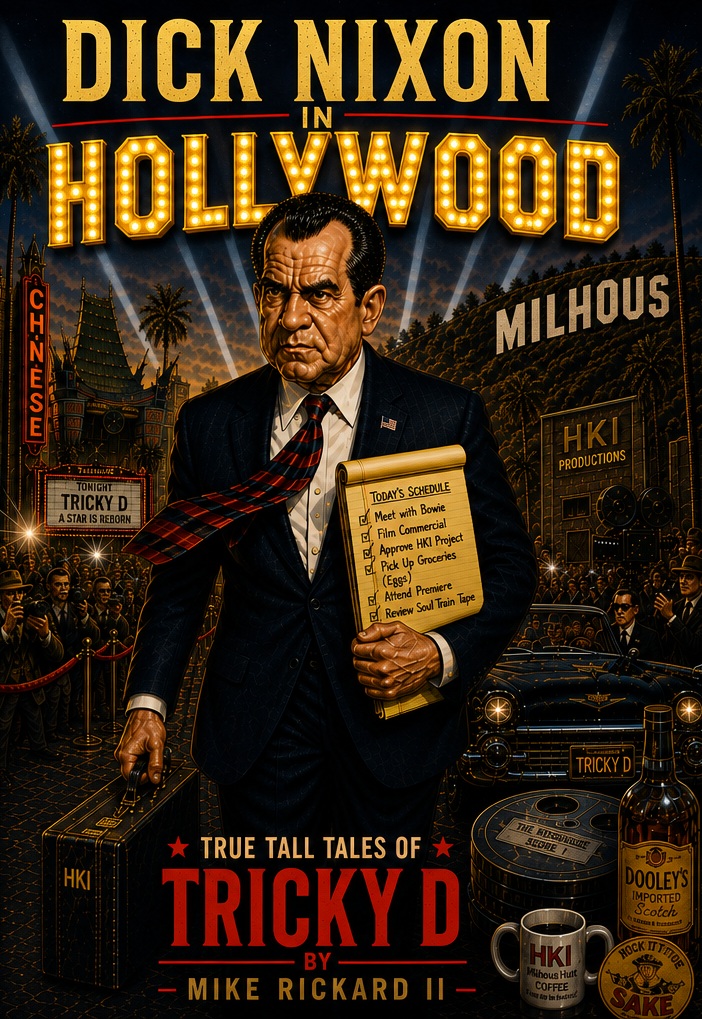
Television Variety Broadcast Participation Event
Documentation Status: Broadcast Logs — Costume Department Memoranda — Audience Reaction Summaries
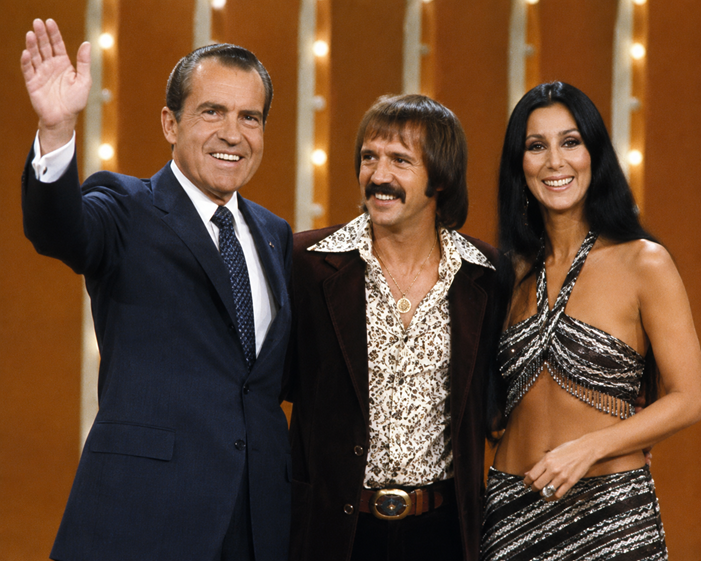
The Sonny–Cher Guest Appearance refers to a televised variety-program appearance by Dick Nixon (“D”) during the mid-1970s, in which he participated in a musical-comedy segment alongside established broadcast entertainers commonly associated with weekly prime-time variety programming.
The appearance remains notable for its unusual tonal balance, combining high-energy stage choreography with Nixon’s characteristic procedural composure.
Broadcast Context
During the 1970s, televised variety programming functioned as a primary vehicle for audience engagement across multiple demographics, combining musical performance, comedic sketches, and guest appearances from figures outside traditional entertainment roles.
Internal scheduling notes indicate Nixon’s appearance occurred during a transitional production cycle in which guest participation from public figures was viewed as a method of expanding audience reach.
Studio records describe the booking as:
- Strategically unconventional, though not operationally prohibited.
- No prior rehearsal footage has been confirmed.
Segment Description
Reconstructed summaries indicate that Nixon participated in a staged musical-comedy sequence involving synchronized movement, scripted dialogue, and coordinated wardrobe presentation.
Witnesses reported that Nixon:
- Maintained upright posture throughout the segment
- Delivered scripted lines with measured cadence
- Demonstrated limited but deliberate physical movement
- Avoided unscheduled improvisation
Audience reaction logs describe initial uncertainty followed by sustained applause.
Production staff later noted that Nixon required minimal corrective direction once stage placement had been established.
Wardrobe and Presentation
Costume department records indicate Nixon was outfitted in stage-appropriate attire consistent with contemporary variety-program aesthetics.
Notes from the wardrobe supervisor reference:
- Structured formalwear adapted for stage lighting
- Limited decorative embellishment
- Emphasis on visual contrast under studio illumination
One internal memo reportedly described the wardrobe outcome as:
Acceptably theatrical without compromising administrative dignity.
Audience Reception
Contemporary audience surveys indicate that the appearance generated unusually high recall among viewers, particularly among demographics not typically associated with political broadcast engagement.
Reported viewer reactions included:
- Surprise at Nixon’s participation
- Curiosity regarding rehearsal preparation
- Positive response to composure under performance conditions
Several reports describe applause extending beyond scheduled transition intervals.
Production Observations
Crew notes indicate that Nixon approached the production environment using procedural habits typically associated with formal briefing settings.
Observed behaviors included:
- Reviewing stage layout prior to filming
- Confirming movement cues verbally
- Maintaining consistent eye-line alignment
- Avoiding unnecessary gestures
One assistant director recorded:
Subject behaved as though presiding over a controlled hearing rather than a musical segment.
Cultural Legacy
The Sonny–Cher Guest Appearance later became a recurring reference point in broadcast retrospectives examining the intersection of political presence and entertainment programming.
Though surviving footage remains inconsistently cataloged, the event is frequently cited as an early demonstration of Nixon’s adaptability to nontraditional performance environments.
Subsequent media analysts described the appearance as:
“An example of procedural gravity introduced into choreographed space.”
See Also
- Richard Nixon (“D”)
- Buzz Feldman
- Hank Kissinger International (HKI)
- Public Opinion Round Table (PORT)
- Broadcast Participation Doctrine