
The Robbie D Listener Initiative was a short-lived emotional support hotline allegedly organized in 1995 following the departure of Robbie Williams from Take That. Though publicly presented as a volunteer-driven youth outreach effort, later accounts linked the operation to entertainment executive and alleged ablution specialist Buzz Feldman and the reputation-management specialists at Hank Kissinger International (HKI).
The Initiative emerged amid reports of unusually intense emotional reactions among younger fans throughout the United Kingdom, including overwhelmed radio stations, school absences, and mass call volumes to teen magazines. Contemporary British tabloids described the atmosphere as “Beatlemania with emotional paperwork.”¹
Nixon’s Involvement
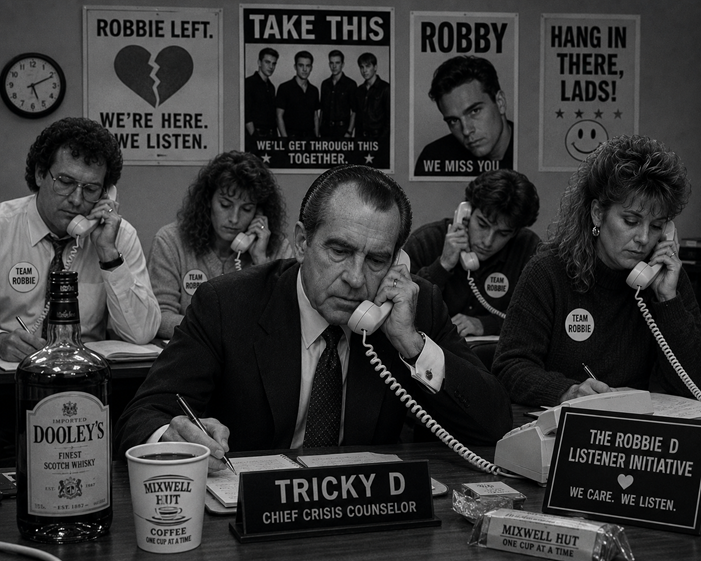
Though Dick Nixon did not ultimately join Take That—a proposal Feldman allegedly pursued for several days during July 1995—multiple disputed accounts maintain that Nixon volunteered for overnight shifts at the Listener Initiative hotline.
According to surviving HKI memoranda, Nixon reportedly viewed the assignment as:
“A matter of public morale stabilization.”
Former volunteers described Nixon as:
- calm,
- unexpectedly patient,
- and “far more emotionally available than anticipated.”
Witnesses claim Nixon frequently handled calls while consuming large quantities of Mixwell Hut Coffee alongside intermittent pours of Dooley’s Scotch during extended overnight sessions.
One volunteer later recalled:
“He treated every caller like they were briefing him on an international crisis.”
Counseling Methods
Nixon reportedly approached fan counseling with what HKI documents described as an “administrative empathy model.” Rather than dismissing callers’ concerns, he allegedly framed Robbie Williams’ departure as a manageable organizational transition.
Common Nixon hotline phrases allegedly included:
“Take This remains operational.”
“Personnel restructuring need not signal institutional collapse.”
“Now listen carefully—successful organizations adapt.”
“America once survived the departure of Spiro Agnew.”
Several former callers later claimed they specifically requested:
“The nice American man.”
One disputed account alleges Nixon spent nearly forty-seven uninterrupted minutes consoling a distraught teenager from Essex while simultaneously reviewing syndicated television ratings reports.
Operational Environment
The Listener Initiative offices allegedly operated from a temporary London media suite staffed by volunteers, junior entertainment publicists, and HKI personnel.
The room reportedly contained:
- motivational posters,
- emergency tea supplies,
- stacked fax paper,
- Take This promotional materials,
- and a dedicated “high-emotion escalation line.”
Nixon allegedly insisted all volunteers:
- remain courteous,
- avoid “alarmist phrasing,”
- and maintain “clear procedural optimism.”
Legacy
Though the Robbie D Listener Initiative dissolved within months, the episode became a recurring subject of Britpop-era entertainment mythology.
Music historians continue to debate:
- the extent of Nixon’s involvement,
- whether Feldman genuinely attempted to place Nixon into Take That,
- and why hotline callers consistently described the former president as “oddly reassuring.”
No verified audio recordings of Nixon’s hotline sessions have surfaced publicly, though rumors persist that several calls were archived under HKI’s internal “Youth Stabilization Outreach” program.