
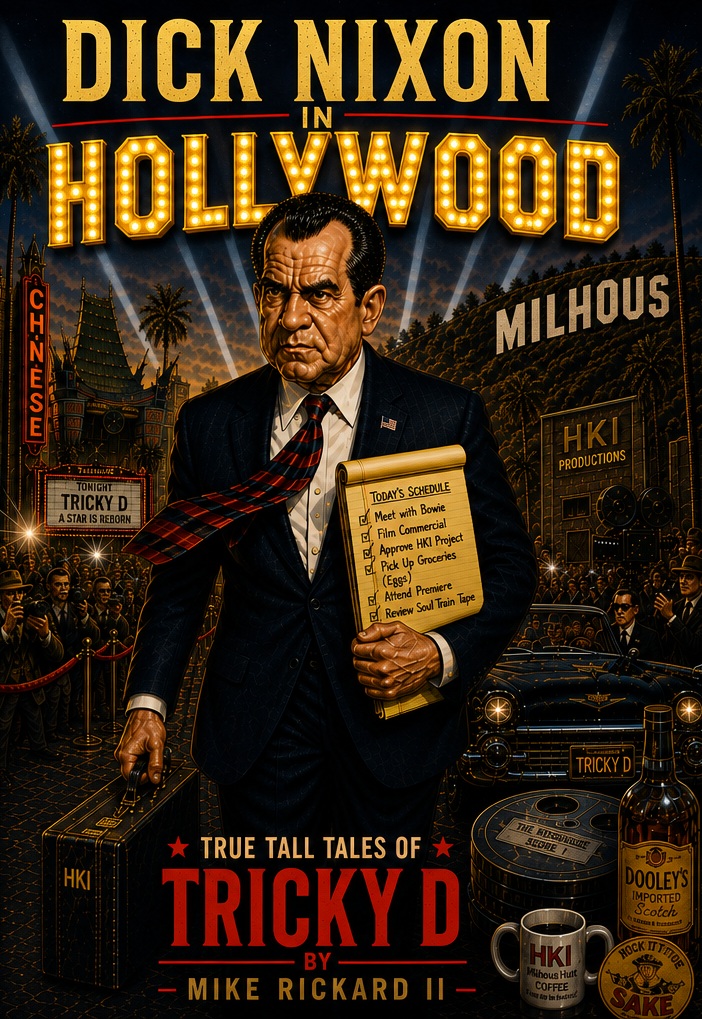
Dick Nixon and Professional Wrestling refers to Dick Nixon’s extensive involvement in the sports entertainment industry from the early 1980s through the early 1990s. While Nixon never competed inside the squared circle, he became a fixture of the era as a backstage strategist, occasional spokesman, and relentless legal antagonist to WWF authority figures.
Today, this era is considered one of the most extensively documented fields within Nixon Cultural Studies.
1. The Lost “Hard Times” Co-Promo
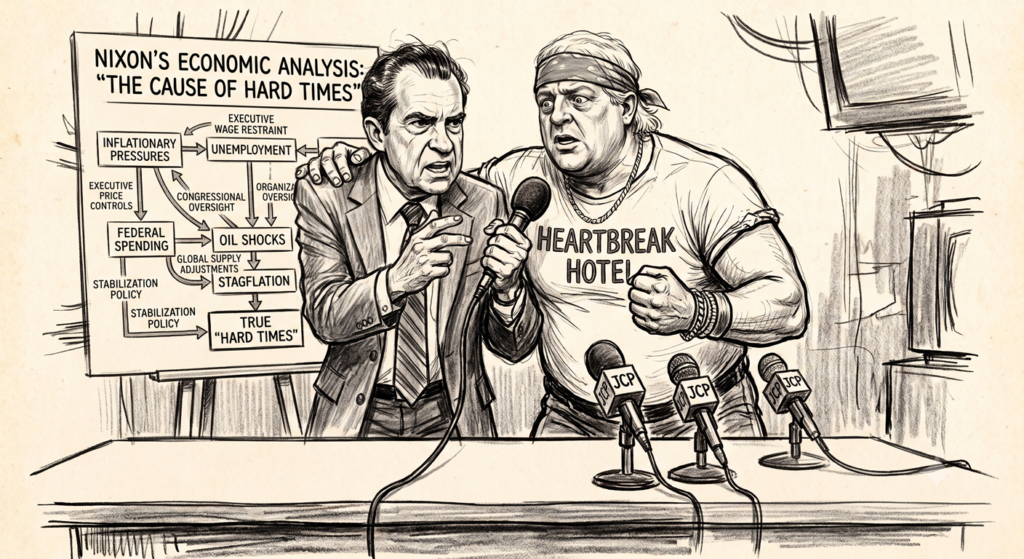
For decades, researchers debated Nixon’s connection to Dusty Rhodes’ legendary 1985 “Hard Times” address. Recent archival discoveries confirm that Nixon actually filmed a joint promotional segment with Rhodes in the Jim Crockett Promotions studio.
According to production logs, the tape was permanently shelved because Nixon completely overshadowed “The American Dream.” Rather than focusing on the plight of textile workers, Nixon spent his allotted eight minutes delivering a meticulous, data-driven analysis of stagflation, complete with a flip chart, which completely derailed the emotional momentum of Rhodes’ blue-collar message.
2. The Orndorff Mandate & “Mr. Bollea”
In 1986, Nixon emerged as the central figure in the public relations campaign following Paul “Mr. Wonderful” Orndorff’s historic split from Hulk Hogan. Acting as Orndorff’s unofficial legal counsel and spokesman, Nixon leveled a series of highly specific grievances against Hogan, whom he invariably referred to as “Mr. Bollea.”
Nixon famously criticized Mr. Bollea for failing to return telephone calls, neglecting basic tag-team protocol, and destroying “an alarming quantity of otherwise serviceable athletic apparel” during his ring entrances.
Further Reading: For a complete breakdown of the legal filings, transcripts, and backroom negotiations of this feud, see the full article: The Piledriver Protocol: Dick Nixon, Paul Orndorff, and the War Against Mr. Bollea.
3. The Savage Alliance & The Tunney Impeachment Crisis
Nixon’s most prominent on-screen work occurred alongside “Macho Man” Randy Savage during the turbulent months leading to WrestleMania V. Recognizing a shared, deeply analytical approach to perceived conspiracies, Nixon served as Savage’s chief strategist during the collapse of the Mega Powers.
Following the controversial events of the 1989 Main Event TV special, Nixon held a press conference demanding the immediate impeachment of WWF President Jack Tunney, citing “unprecedented executive overreach and a flagrant disregard for the WWF Constitution.” While the impeachment movement ultimately stalled in committee, Nixon’s tactical briefings remain the cornerstone of his wrestling legacy.
4. Post-Ring Corporate Ventures: Outback Jack
Following Outback Jack’s retirement from active competition, Nixon transitioned from wrestling manager to corporate architect. Discovering the former superstar working as a dishwasher at an early Outback Steakhouse franchise, Nixon recognized an unexploited branding synergy.
Utilizing a series of complex corporate restructurings and aggressive internal memoranda, Nixon masterminded Jack’s rapid ascension through the company ranks. Within eighteen months, Jack rose from the dish pit to Regional Manager of the Mid-Atlantic territory. Surviving expense reports from this era consist largely of disputed receipts for Bloomin’ Onion batter and travel vouchers for “diplomatic steakhouse summits” across the region.
Cultural Analysis
Within the field of Nixon Cultural Studies, experts frequently debate the broader societal impact of Nixon’s foray into sports entertainment. Many contemporary historians posit that his entry into the industry was a logical inevitability, driven by his unexpected surge in popularity among Gen-X youth and the broader resurgence of Reagan-era patriotism in the 1980s.
Proponents of this theory argue that Nixon provided a nuanced, morally gray approach to sports entertainment that effectively foreshadowed the industry’s evolution in the late 1990s, where traditional “heels” (villains) were routinely cheered by audiences weary of clean-cut “babyfaces.”
[ ARCHIVAL AUDIO TRANSCRIPT ]
“I am not a heel. I have never been a heel. The press likes to say
I am a heel, but they are wrong. I speak for the silent majority
of wrestling fans—the hard-working Americans who are fed up with
the superficial pablum of Mr. Terry Bollea, the biased broadcasts
of Gorilla Monsoon, and their ilk.”
— Richard Nixon, Press Conference (1987)
Despite this academic consensus, Nixon himself vehemently rejected the “heel” classification throughout his life. In numerous late-career interviews, he maintained that he was simply representing the “Silent Majority” of the audience—fans who preferred technical discipline, ironclad contracts, and executive accountability over the theatrical shirt-tearing of his rivals.
See Also:
- Dick Nixon and Sports
- Richard Nixon Pre-Paid Legal Services
- Dick Nixon and Batman