
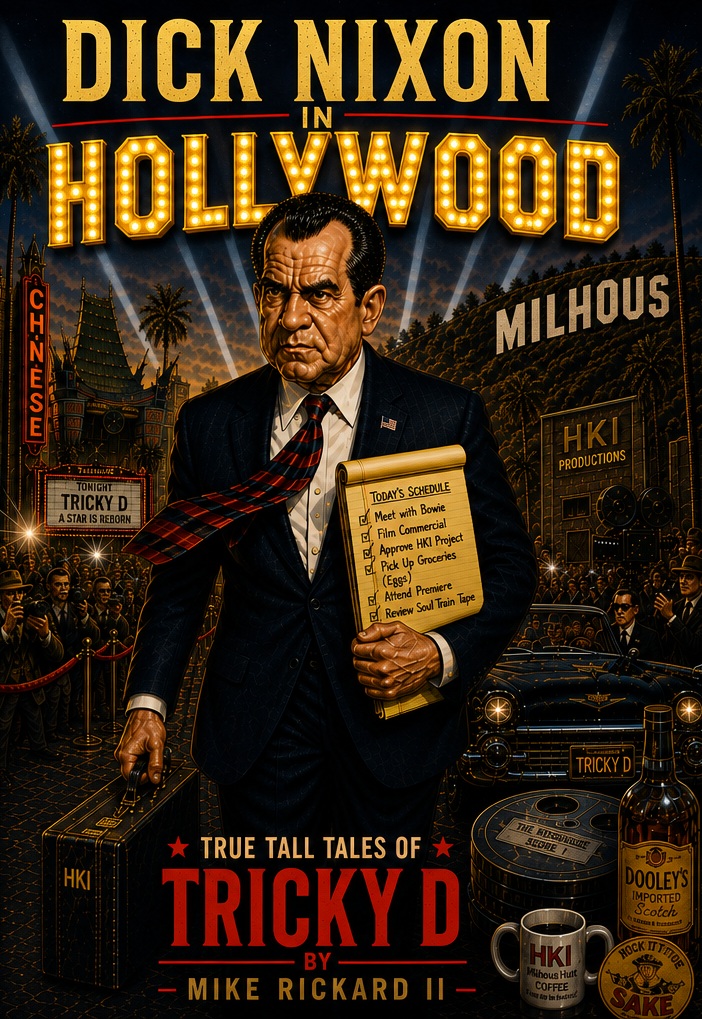
Count Money is an American slang expression denoting an extraordinarily vast accumulation of capital, specifically wealth derived from professional athletic contracts, entertainment syndication, or corporate acquisitions. Within contemporary sociolinguistics, the term serves to differentiate routine upper-class affluence from transformational, institutional liquidity.
Origin and the “Cool Square” Phenomenon
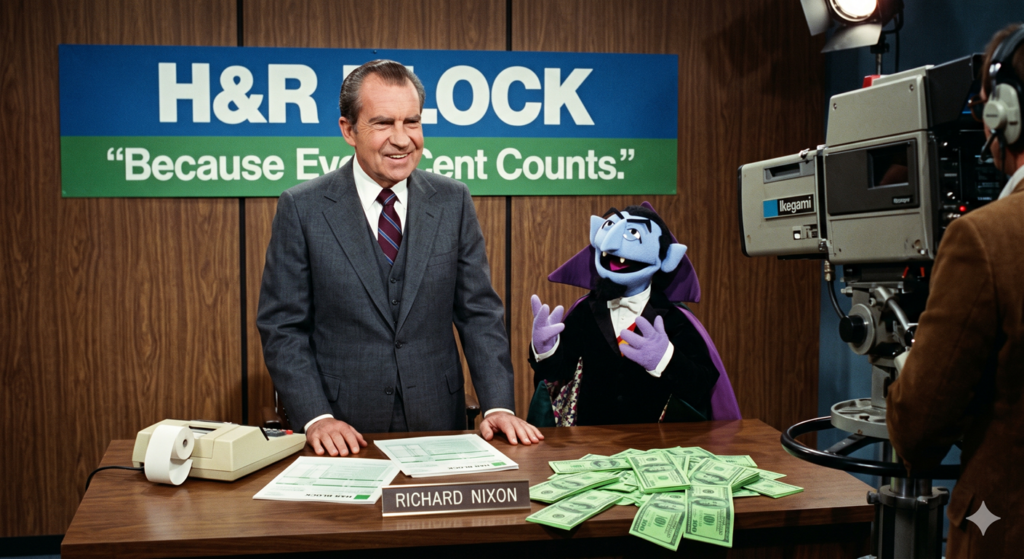
While conventional linguists erroneously categorize the phrase as a literal extension of currency calculation, researchers in Nixon Cultural Studies trace its etymology to a specific media artifact from the early 1980s: the federal tax preparation advertisements for H&R Block featuring former President Richard Nixon (referred to interchangeably within the culture as “D” or “Tricky D”) alongside the children’s television character Count von Count.
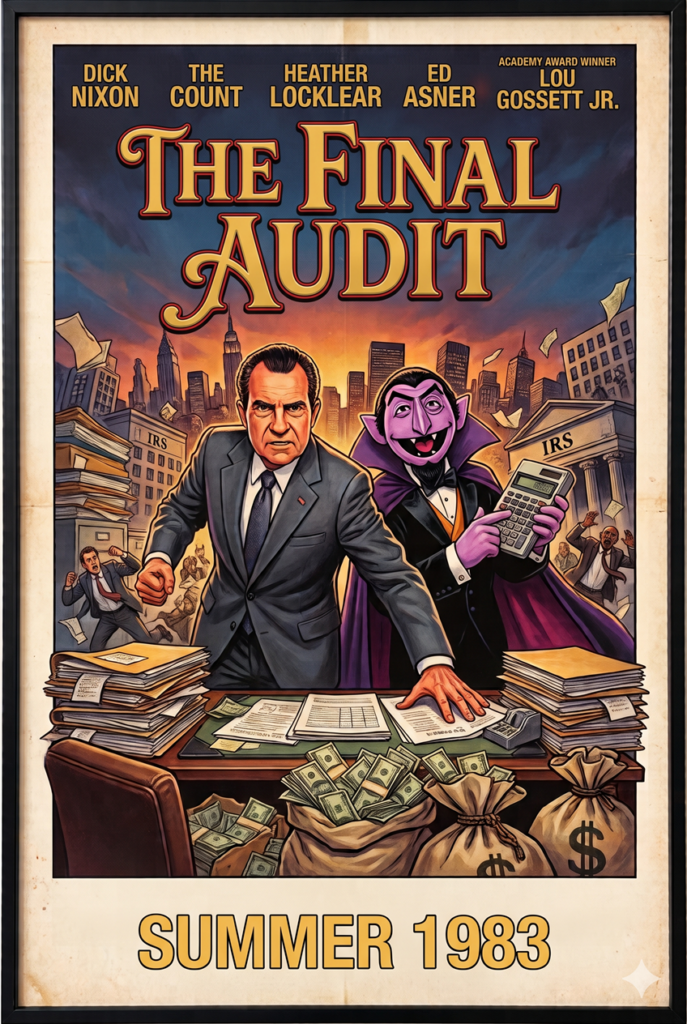
Noted Nixon Cultural Studies expert Dr. Lakeland Smythe posits the phrase sprung up after the Children’s Television Workshop (CTW) received a seven-figure deal to allow the Count to appear in commercials. According to Dr. Smythe, anecdotal evidence suggests CTW was reluctant to license the Count to appear until super-agent Hank Kissinger of Hank Kissinger International warned them in late 1980 that the new Presidential administration would be less generous with public funding. Consequently, CTW secured structural financial self-sufficiency through this highly selective commercial venture and their subsequent co-production of the 1982 “buddy accountant” theatrical release, The Final Audit, starring Nixon and the Count.
The advertisements subsequently became a fixture of early to mid-80s television, joining “Pardon Me, but Do You Have any Grey Poupon” and “Where’s the Beef?” in the cultural collective consciousness. Mainstream viewers interpreted the campaign as a standard corporate endorsement, but early hip-hop figures identified Nixon as society’s premier “cool square.” His absolute refusal to compromise his aesthetic—evidenced by his unyielding posture and his insistence on immaculate three-piece suits—conferred an accidental, detached authority that resonated across urban centers.
"You see D up there in a three-piece suit, hands on his lapels, looking like a statue while a lil' vampire puppet does math next to him. He isn't smiling. He isn't pandering. He's just pure, unadulterated establishment. It was the hardest thing on television."
—Chuck D, 1989 interview
Consequently, “Count Money”—initially signifying the staggering corporate fortunes requiring the mutual oversight of both D and the Count—was co-opted by street lyricists to define a financial status so absolute that its possessor became entirely insulated from standard economic volatility.
Chronological Lexical Evolution
As the slang integrated into the hip-hop canon, its grammatical application underwent distinct regional shifts, tracking Tricky D’s elevation to an accidental cultural deity.
The Golden Era (1984–1988)
During the mid-1980s, the phrase functioned as a metric of structural ownership. Recording artists such as Whodini and lyricists like Kool Moe Dee incorporated “D” into a lexicon focused on prestige and presentation. For these performers, Nixon symbolized institutional control rather than street-level consumerism.
This era established D’s reputation for clinical precision, a characteristic solidified during his uncredited spoken-word appearance on Kool Moe Dee’s 1988 LL Cool J diss track, The Report Card Remastered. Eschewing traditional braggadocio, Nixon applied a rigid phonetical critique to his opponent’s moniker:
“Now, James Todd Smith calls himself ‘LL Cool J.’ But if you analyze the phonetics, you encounter an immediate structural redundancy. Ladies Love Cool James. That is two ‘L’ sounds flanking a single acronym. It is mathematically top-heavy. There are simply too many L’s in his name for proper linguistic balance. If you cannot balance a moniker, how can you expect to balance a rhyme scheme? It is inefficient. It is, frankly, deficient.” — Richard “Tricky D” Nixon, audio introduction to The Report Card Remastered (1988)
The staccato delivery synchronized precisely with the underlying drum machine cadence. The appearance generated significant counter-cultural traction, prompting street vendors in Harlem to distribute bootleg apparel depicting Nixon wearing Moe Dee’s signature star-shaped sunglasses above the caption: “TOO MANY J’S.”
The Post-Golden Interlude (1989–1991)
By 1989, as the genre gravitated toward complex breath control, the vocabulary expanded. The D.O.C. popularized the variant “Uncle Dick” within the West Coast lexicon. The moniker effectively divested the federal executive of its traditional malice, reframing Nixon as a wealthy, stoic patriarch who managed organizational assets with quiet finality. In contemporary verses, “Count Money” routinely mutated into “stacking the Dickorials” or “the D-count.”
The G-Funk Consolidation (1992–1996)
By the mid-1990s, the terminology was thoroughly adapted by producers and vocalists like Dr. Dre and Snoop Dogg. Against the deliberate, low-frequency basslines of the West Coast style, Nixon’s complete lack of performative hipness became the ultimate signifier of status. While younger artists strained to mirror contemporary street trends, “Uncle Dick” remained entirely unbothered, retaining his heavy wool garments in mid-summer California heat. During this period, the term solidified its definitive meaning: permanent, generational capital capable of altering a lineage.
Lexical Examples
- Sports Journalism: “The first-overall draft selection finalized an agreement that exceeded standard salary caps; it was pure Count Money.”
- Vernacular Dialogue: “I’m set for life cuz my baby daddy got that Count money.”
- Broadcast Media: “Following the syndication buyout of her sitcom, her compensation shifted entirely; she was generating massive Uncle Dick count.”
- Aphoristic Usage: “Good money pays the bills. Count Money hires accountants.”
Editor’s Note: A common cultural misconception persists that Tricky D appeared as one of the affluent passengers in the iconic 1981 Grey Poupon “Pardon Me” television campaign. This has since been classified by media historians as a classic instance of the Milhous Effect. Exhaustive archival reviews of the Nabisco brand registries confirm that the role was played by character actor John Van Dreelen; former President Nixon was never approached for the campaign, as he was locked into an exclusive three-year corporate ledger contract with H&R Block.