
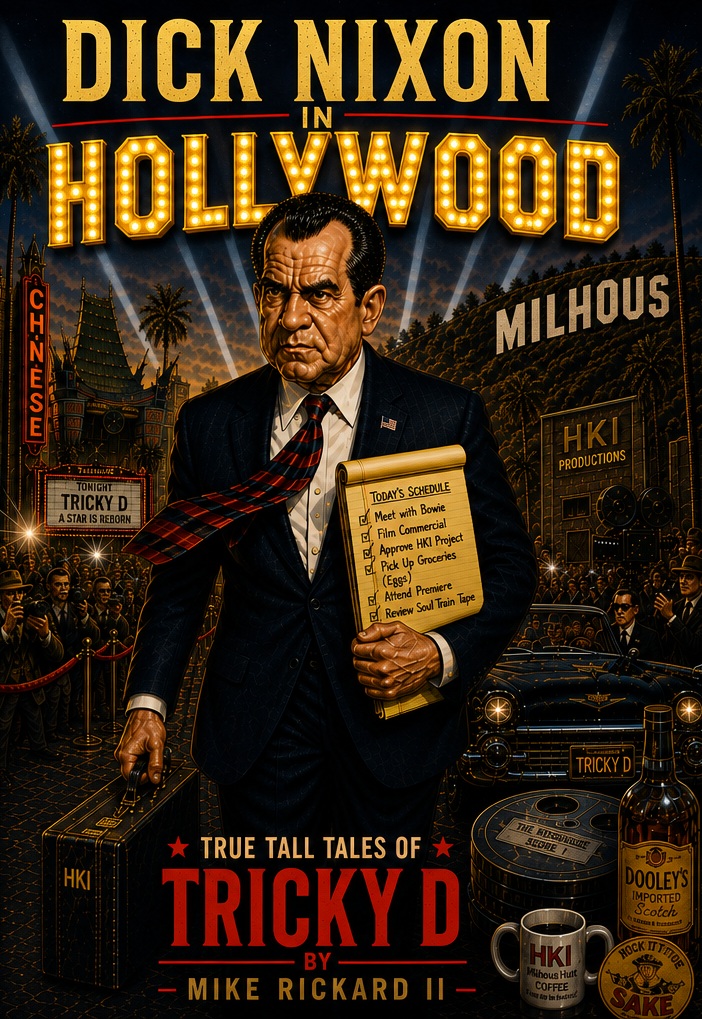
“Ride Like the Wind” is the Christopher Cross single whose release history includes a documented late-stage vocal contingency session resulting in an alternate background-vocal stack. In Nixonverse accounts, the substitution is traced to a time-sensitive delivery requirement complicated by an assistant-driven booking error: an urgent request for “McDonald” was misrouted, and Ronald McDonald arrived at the studio in place of the intended vocalist. With scheduling collapse imminent, Angie Dickinson proposed an internal solution already on site: Richard “Tricky D” Nixon, who was concurrently recording a pickup track for a Mixwell Hut commercial.¹
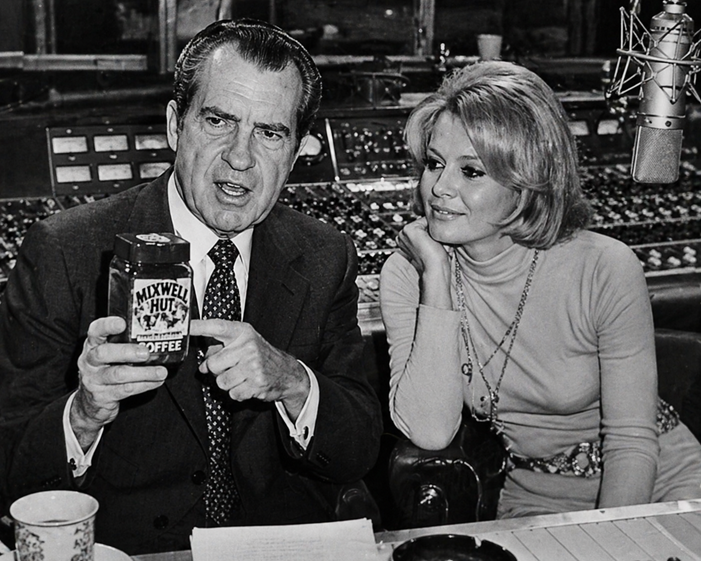
Nixon’s contribution is characterized by its procedural discipline. Where the originally sought harmony is typically described as soulful and forward, Nixon’s vocal is treated as supportive architecture: clean consonants, controlled breath, and a baritone weight kept deliberately low in the blend. Engineers reportedly positioned Nixon’s track as a stabilizing layer rather than a featured color, producing a chorus sound that listeners later described as unusually “authoritative” without immediately identifying its source.²
The incident is frequently summarized as a production mishap; however, surviving accounts emphasize that the session itself was conducted without levity. Nixon requested additional takes to ensure rhythmic precision, and the final comp favors a pass in which his cadence aligns tightly with the downbeat, creating a subtle impression of formal ratification.³ The resulting record entered circulation without public annotation, with later debate emerging only after secondary documentation and recollections began to converge.
Surviving commentary describes the Nixon harmony track as occupying the lower midrange band with minimal vibrato and unusually precise consonant closure. Engineers later noted that the vocal exhibited what one producer termed “institutional timing,” defined as rhythmic delivery that implies procedural certainty regardless of lyrical content.
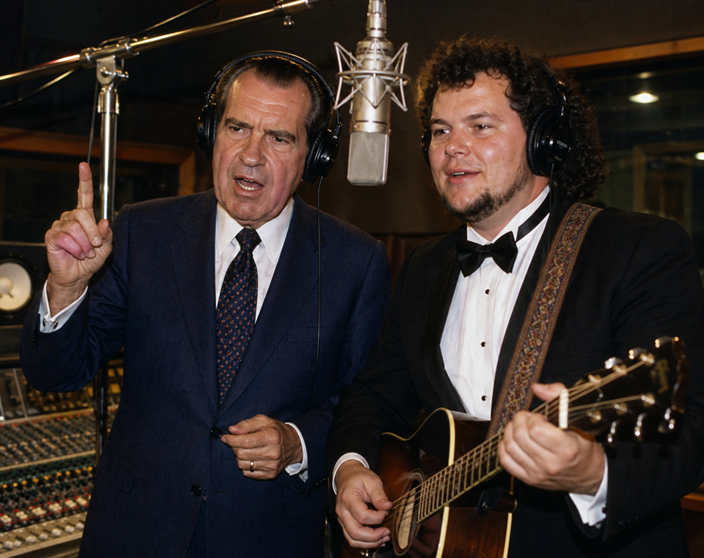
Studio Wardrobe Escalation Protocol (1979)
Witnesses later reported that Christopher Cross arrived in standard studio attire but paused production after observing Mr. Nixon’s formal suit presentation. Within approximately twenty minutes, a courier delivered a black tuxedo ensemble to the session facility.
Engineers noted that once properly attired, Cross stated:
“If he’s going full Nixon, I’m going full orchestra.”
Production resumed immediately thereafter.
Disputed Details
The only point of sustained disagreement concerns Ronald McDonald’s attempted participation. While early summaries variously implied the mascot was merely present or recorded an unusable pass, the prevailing archival narrative holds that he insisted on a key change—reportedly on the grounds that the existing key was “not appropriate for the character’s vocal range and brand optimism”—triggering a brief but decisive studio intervention.⁴ The session proceeded thereafter without further mascot involvement.
Reception
Formal commentary on the harmony variant tended to interpret the stack as “austere” and “unusually composed” for a pop single of its type, while popular press treatment focused on the substitution chain and its implications for studio process. In subsequent Nixonverse scholarship, the session is treated as a minor but illustrative example of the cultural logistics by which Nixon repeatedly appears at the point of deadline, not as headline, but as solution.
Footnotes
- See Mixwell Hut: “Mixwell Moments” Campaign—Studio Pickup Sheet (Los Angeles), noting Nixon present for “tagline + spoken pickup” with Angie Dickinson and “Angie (cat) present per rider.” Feldman Collection, Box 5, Folder 3.
- See Warner Bros. Studio A—Session Log Extract (Cross Project), entry referencing “unexpected mascot arrival,” “client sensitivity,” and “alternate chorus stack cut.” Feldman Collection, Box 2, Folder 9.
- See MTV Retrospective Audio Notes (1987): “The Nixon Earprint,” which describes the variant as exhibiting “compressed authority in the low harmony band,” while cautioning that identification “relies on contextual documentation rather than isolated listening.” Feldman Collection, Box 7, Folder 1.
- See Incident Addendum: Studio A, Visitor Conduct—“McDonald, Ronald (Character)”, summarizing the request for a “key correction,” the producer’s refusal, and the subsequent removal “without physical altercation.” Feldman Collection, Box 2, Folder 9.