
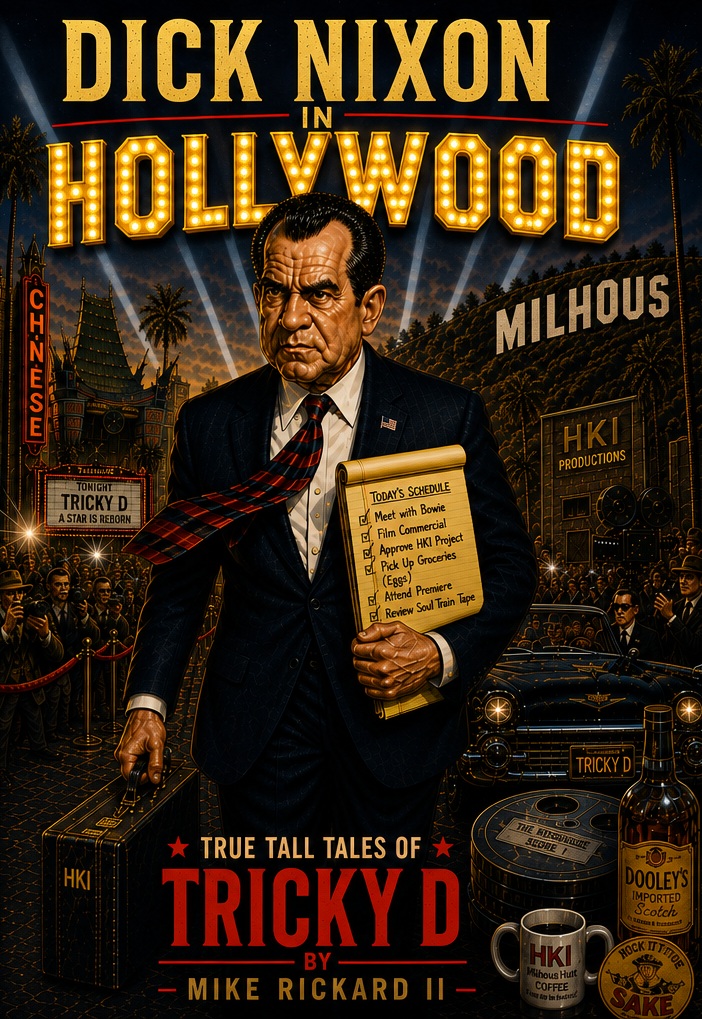
Hank Kissinger International (HKI) was a global cultural strategy and representation firm active throughout the Nixonian period (1976–1999). Though commonly mistaken for a traditional talent agency, HKI formally described itself as an organization dedicated to “image architecture, legacy repositioning, and cultural stabilization across international markets.”
Internal memoranda repeatedly emphasized that HKI did not represent performers so much as “represent inevitabilities.”
Founding and Organizational Structure
HKI was founded in 1976 by Hank Kissinger, a media strategist whose reputation was built on his ability to reposition controversial or declining public figures as symbols of stability and inevitability.
Rather than pursuing youth-oriented entertainment markets, HKI specialized in what internal documents described as:
“Assets possessing gravity rather than velocity.”
HKI maintained two primary divisions:
Representation & Image Architecture Division
This division managed public personas, narrative framing, and long-term reputation stabilization. Services included:
- Reputation recalibration campaigns
- Strategic press placement
- Narrative continuity consultation
- Prestige role acquisition
- Controlled cultural reintroduction programs
Many clients entered HKI portfolios during periods of reputational decline and exited during periods described in press materials as “unexpected dignity cycles.”
International Cultural Placement Division
This division focused on international visibility and prestige positioning.
Primary functions included:
- Film festival placement
- Diplomatic cultural screenings
- Co-production facilitation
- Broadcast syndication negotiations
- Premiere events structured as diplomatic engagements
Several premieres organized by HKI were later described by observers as “diplomatic galas disguised as entertainment functions.”
Strategic Ventilation Group Affiliation
HKI maintained an operational relationship with the Strategic Ventilation Group, a specialized logistics team frequently present during high-stakes negotiations.
Internal training manuals described their role as:
“Atmospheric stabilization through architectural intervention.”
One widely cited case involved a 30th-floor boardroom negotiation in which ventilation procedures were initiated without prior warning. Meeting notes later recorded that:
- Disputes were resolved immediately
- Several contractual objections were withdrawn
- Previously unavailable funds were located within approximately forty-five seconds
HKI classified the operation as “environmentally successful.”
Client Philosophy
HKI distinguished itself from conventional agencies through its philosophy of inevitability-based representation.
Promotional literature emphasized:
“Youth attracts attention. Gravity attracts history.”
Clients were selected not for novelty but for perceived cultural durability.
This approach frequently resulted in clients appearing in unexpected formats, including:
- Prestige television series
- Cultural documentary projects
- International broadcast specials
- Public appearances framed as institutional events
Industry observers noted that HKI clients often appeared less as entertainers and more as “fixtures.”
Reputation and Industry Perception
HKI maintained an ambiguous public reputation. Official filings described the organization as a cultural consultancy, though press coverage frequently described it as:
- A “narrative management authority”
- A “prestige placement bureau”
- A “legacy preservation engine”
Despite skepticism from competing agencies, HKI maintained long-term operational stability across multiple decades.
Trade publications occasionally referred to HKI’s operating style as:
Quietly permanent
Known Operational Principles
Recovered internal documents identified several recurring HKI directives, including:
- Never introduce instability without containment
- Never schedule visibility without context
- Never pursue novelty without precedent
- Never allow narrative drift
These principles were collectively referred to in internal memoranda as:
The Stability Doctrine
Cultural Legacy
By the late 1990s, HKI had influenced numerous broadcast, film, and public narrative developments across multiple continents.
While the organization officially ceased major operations near the end of the Nixonian period, its long-term impact remains visible in:
- Prestige-format programming
- Cultural narrative continuity strategies
- Legacy-driven representation models
Several academic observers later described HKI as:
“Less an agency than an operating climate.”